Introduction
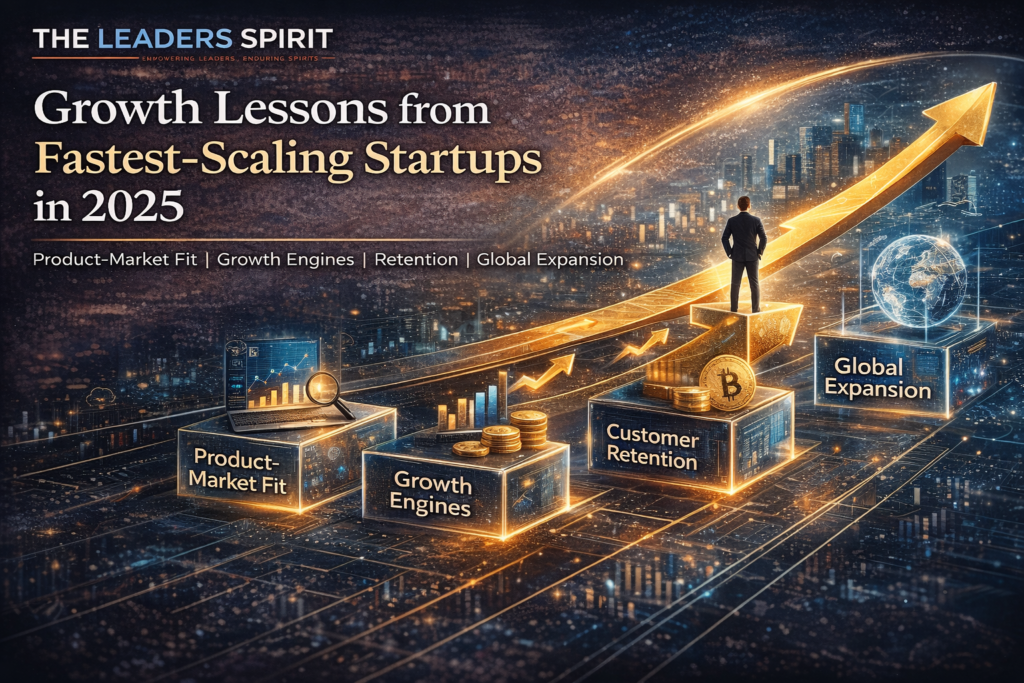
In today’s rapidly evolving business landscape, certain startups are breaking growth barriers with astonishing speed. As technology, customer expectations, and global markets continue to shift, the strategies that fuel accelerated scaling have also transformed. In this article, The Leaders Spirit explores key growth lessons from some of the fastest-scaling startups in 2025 — lessons that founders, executives, and business leaders can apply to their own ventures.
1. Focus on Product-Market Fit Before Scaling
One of the biggest mistakes early-stage startups make is scaling too soon. The fastest-growing startups in 2026 stopped chasing growth long enough to perfect their core offering.
💡 Lesson:
Don’t scale before you validate product-market fit. Conduct customer interviews, monitor usage data, and iterate relentlessly. Only once your solution consistently delivers measurable value should you invest heavily in scaling.
Example Insight:
Startups leveraging AI or automation first perfected user value triggers — such as time saved or ROI generated — before increasing marketing spend.
2. Build Repeatable Growth Engines
Scaling isn’t just about one big breakthrough — it’s about creating processes that consistently generate new customers.
🚀 Growth Engines Include:
- SEO & content strategy
- Referral and affiliate networks
- Organic social communities
- Channel partnerships
Fast-scaling startups in 2026 integrated these growth channels from day one instead of relying on a single acquisition tactic.
📌 Lesson:
Design growth channels that feed each other. For example, content builds SEO traffic, which fuels a referral program and attracts partnership interest.
3. Prioritize Customer Retention and Value Expansion
Acquiring customers is expensive — but keeping them is profitable. The startups scaling fastest in 2026 focused on retention, product engagement, and long-term value.
💼 Lesson:
Retention should be treated as a core growth metric. Track:
- Churn rate
- Lifetime value (LTV)
- Usage frequency
Offer value expansions such as upsells, premium features, and personalized onboarding to increase customer lifetime value.
4. Leverage Cloud and Automation for Scalability
Technology infrastructure makes or breaks scaling. The fastest-growing companies used cloud platforms and automation tools to ensure operations could handle rapid growth without administrative burden.
✨ Automation Use Cases:
- Customer support bots
- Automated onboarding
- Scalable data pipelines
- Infrastructure as code
📌 Lesson:
Invest early in scalable infrastructure. You’ll prevent costly tech debt and operational bottlenecks that slow down growth.
5. Champion Company Culture and Distributed Teams
Scaling fast often means scaling people and culture. Startups that grew rapidly in 2026 maintained clarity of purpose while empowering distributed teams.
🌍 Key Cultural Practices:
- Clear communication frameworks
- Purpose-driven company values
- Remote collaboration tools
- Continuous feedback loops
💡 Lesson:
Culture isn’t an HR checkbox — it’s a growth driver. When teams are aligned on mission and communication flows freely, execution becomes faster and more consistent.
6. Adopt a Data-Driven Decision Framework
Data is not just an afterthought — it’s a strategic asset. Startups scaling the fastest used analytics to:
- Validate hypotheses
- Guide product decisions
- Improve user engagement
- Forecast growth
🔍 Lesson:
Build dashboards and feedback loops that give real-time insight into your business — from user behavior to financial metrics.
Focus on leading indicators instead of lagging metrics to predict trends before they happen.
7. Think Global Early
Globalization isn’t just for later stages anymore. Many startups in 2026 entered international markets while still early in their lifecycle by designing products and strategies that transcend borders.
📌 Lesson:
From day one, consider localization, compliance, and multicultural UX. A global mindset translates to bigger markets and stronger growth.
Conclusion
The fastest-scaling startups in 2026 share common strategic themes: focus before growth, build repeatable engines, prioritize retention, invest in scalable infrastructure, cultivate culture, adopt data-driven decisions, and think globally.
Whether you’re a founder, CXO, or emerging leader, these lessons provide a roadmap for sustainable scaling — not just rapid growth.