Region: Asia-Pacific
Sector: Geopolitics | Global Security
Date: January 2026
Source: The Wall Street Journal
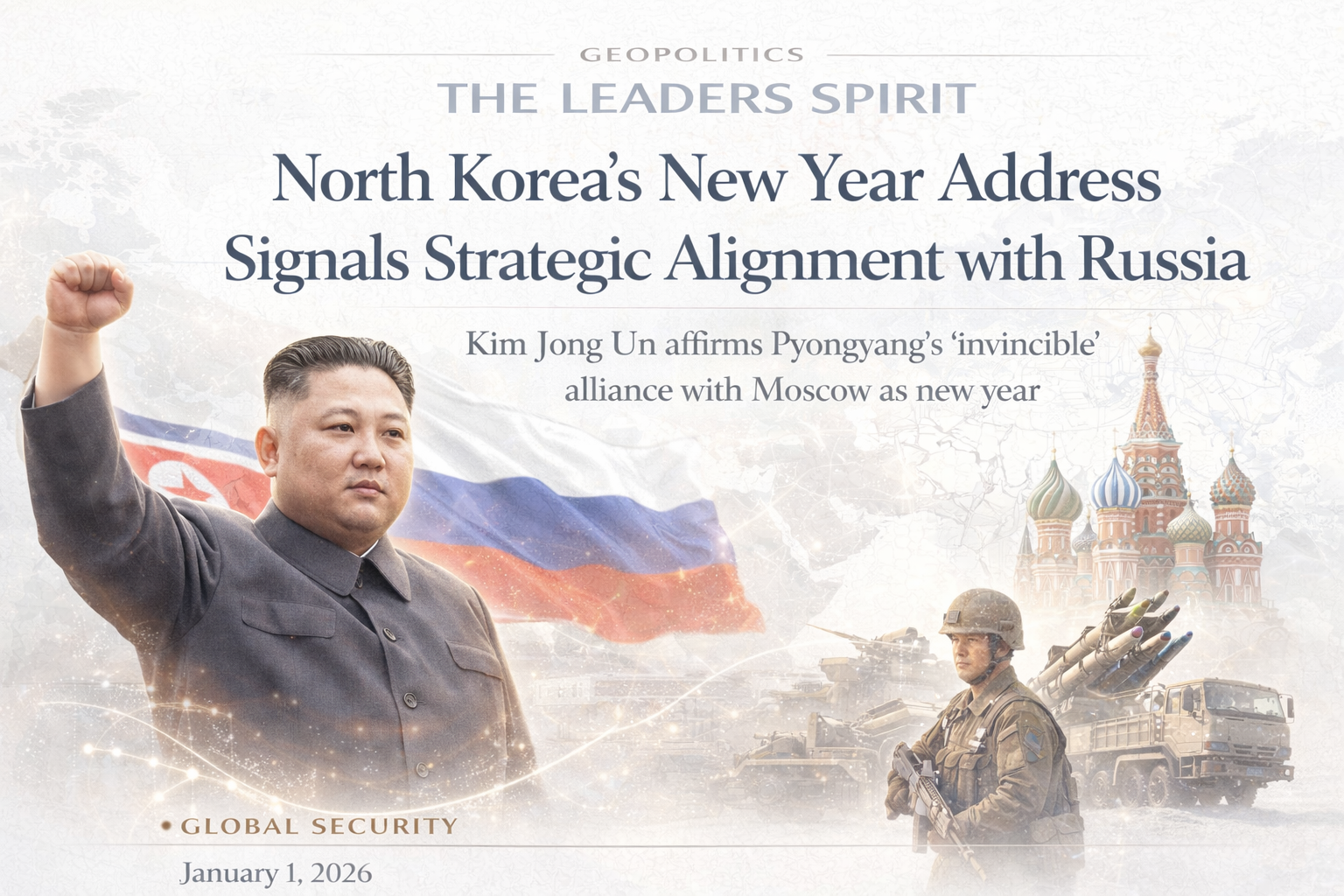
North Korean leader Kim Jong Un began 2026 with a clear geopolitical signal, using his New Year’s address to reaffirm what he described as Pyongyang’s “invincible” alliance with Russia. The speech emphasized deepening military cooperation, shared strategic objectives, and a common stance against what North Korea views as Western-led pressure on sovereign nations.
Kim praised bilateral defense ties and highlighted North Korea’s role in supporting Russian military operations, marking one of the strongest public acknowledgments yet of the partnership. He framed the cooperation as a cornerstone of regional stability from Pyongyang’s perspective, portraying the alliance as both defensive and strategic in nature.
A significant portion of the address focused on North Korea’s ambitions to modernise its defense capabilities. Kim outlined plans to advance weapons development, strengthen military readiness, and enhance technological self-reliance. While specific systems were not detailed, the message reinforced Pyongyang’s intent to accelerate military innovation in the coming year.
Notably absent from the address was any mention of the United States. The omission was widely interpreted by analysts as a deliberate diplomatic signal, underscoring North Korea’s continued distancing from U.S.-led negotiations and security frameworks. Instead, Kim positioned Russia as a key strategic partner in shaping a multipolar world order.
The address comes at a time of heightened geopolitical tension, as global alliances continue to shift in response to prolonged conflicts and strategic competition among major powers. North Korea’s explicit alignment with Russia adds another layer of complexity to regional security dynamics in East Asia, particularly for neighboring countries such as South Korea and Japan.
A broader foreign and military policy outline is expected later in 2026, which may provide further insight into Pyongyang’s long-term strategic objectives. Observers anticipate that North Korea will continue to prioritize military strength and strategic partnerships over diplomatic engagement with Western nations.
Why It Matters
North Korea’s New Year message signals a sustained realignment in Asian geopolitics. By publicly reinforcing its alliance with Russia, Pyongyang is reshaping regional security calculations and alliance networks. For global policymakers and investors alike, the development highlights the growing importance of geopolitical risk assessment in an increasingly fragmented international order.